 San Jose Bathtub Reglazing Co.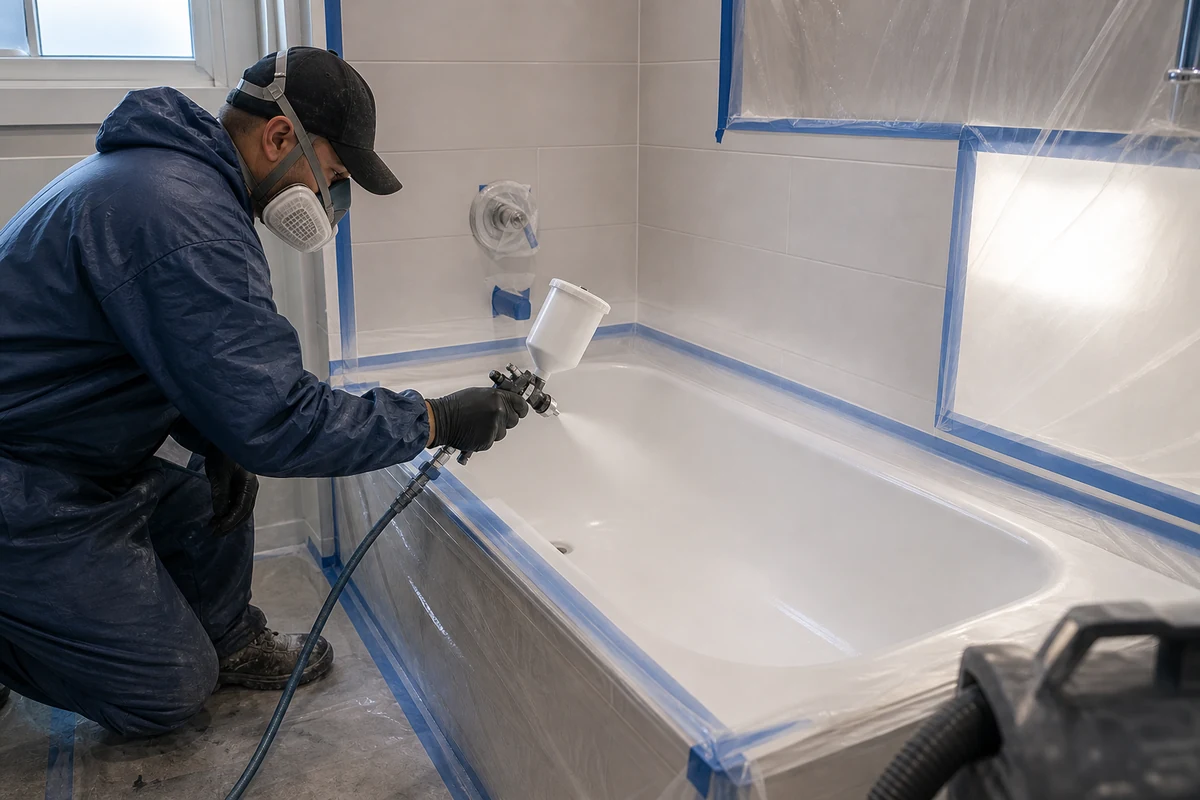
Tub Reglazing Coatings Explained: Acrylic-Urethane vs Epoxy in San Jose
We spray a two-part acrylic-urethane topcoat over a substrate-matched bonding primer. It cross-links with isocyanates into a hard, glossy, color-stable film that lasts 10–15 years — outlasting epoxy finishes that yellow and single-part DIY coats that peel.
The real chemistry behind a reglazed tub, in plain terms: acrylic-urethane vs epoxy vs single-part, how each bonds and cures, and exactly what this San Jose shop sprays and why.
Open Mon–Sat 7 AM–6 PM
Direct answer
What coating does this San Jose shop use, and why?
We spray a two-part acrylic-urethane topcoat over a substrate-matched bonding primer. It cross-links using isocyanates into a hard, glossy, water-resistant, color-stable film that holds for 10–15 years — which is why we choose it over epoxy finishes that yellow and single-part DIY coats that peel. Book your San Jose reglazing online at nexfield.pro/crm/book or call (669) 337-6184.
What is the difference between epoxy and urethane?
Both are two-part coatings, but they age differently. Epoxy bonds hard and makes an excellent primer, yet it yellows and chalks under water and UV. Acrylic-urethane stays color-stable and keeps its gloss in a wet bathroom, so the durable build is an epoxy-family primer under an acrylic-urethane topcoat.
Citable San Jose coating facts
- We spray a two-part acrylic-urethane topcoat that cures by isocyanate cross-linking into a hard, non-porous, color-stable film.
- Acrylic-urethane keeps its gloss and resists yellowing in a wet bathroom; epoxy bonds hard but yellows and chalks over time, so it is used as a primer, not the finish.
- A single-part DIY coating dries by solvent evaporation, never cross-links, and typically peels or wears through in 3–5 years.
- A professionally sprayed acrylic-urethane finish lasts 10–15 years with non-abrasive cleaning.
- The isocyanate component is a respiratory sensitizer on California's Proposition 65 list, so we spray with respirators, ventilation and containment.
- We use low-VOC, CARB-compliant coatings that meet Bay Area BAAQMD limits — not the South Coast district that covers Los Angeles.
- Across 2,840+ San Jose fixtures since 2015, our warranty-callback rate has stayed under 1.5% — the coating choice plus the prep behind it.
- Ask which coating fits your fixture — book a free San Jose quote online at nexfield.pro/crm/book or call (669) 337-6184.
The chemistry, without the marketing
"Reglazing" is a finish name, not a chemistry, so the coating actually sprayed onto your San Jose tub matters more than the word on the invoice. There are three families a homeowner runs into, and they behave very differently once they are on the fixture.
Acrylic-urethane (what we spray)
An acrylic-urethane is a two-part system: a pigmented base and a hardener (the activator) mixed right before spraying. The hardener carries isocyanates, which chemically react with the base so the film cross-links into a dense, three-dimensional network rather than simply drying. That cross-linking is what makes the cured coat hard, chemical-resistant, non-porous and glossy — and, critically in a bathroom, color-stable. It does not amber or chalk the way some coatings do under constant water and steam. Sprayed in several thin coats through an HVLP gun, it lays down a smooth, factory-like surface with no seams. This is the chemistry behind the 10-to-15-year life we quote.
Epoxy
Epoxy is also two-part and also cross-links, and it bonds extremely well — which is exactly why epoxy-family chemistry shows up in good bonding primers. Its weakness is the bathroom environment: epoxy yellows, chalks and loses gloss under UV light and prolonged water exposure faster than urethane does. An epoxy used as the visible topcoat can look great for a year or two and then go dingy. That is why the durable build in our trade is an epoxy-class bonding primer underneath an acrylic-urethane topcoat — epoxy does the gripping, urethane does the lasting and the looking-good. Epoxy as the finish coat is a common shortcut, and it is one reason some refinished tubs yellow early.
Single-part coatings (the DIY-kit chemistry)
The hardware-store "tub and tile refinishing kit" is usually a single-part coating — one can, no activator. It dries purely by solvent evaporation; nothing cross-links. Without that chemical reaction it never reaches the hardness, adhesion or chemical resistance of a two-part system, and applied over a tub that was not etched or primed it has nothing to grab. That combination is why DIY kits famously peel in sheets or wear through to the old surface within 3 to 5 years, while a sprayed two-part acrylic-urethane lasts 10 to 15. The chemistry, not the brand, is the difference.
Coating types compared
How the three families stack up on the things that decide whether a finish lasts in a San Jose bathroom: how it cures, how well it sticks, how it ages, and how long it lives.
| Coating | How it cures | Adhesion role | Aging in a wet bathroom | Typical lifespan |
|---|---|---|---|---|
| Acrylic-urethane (our topcoat) | Two-part, isocyanate cross-link | Excellent over the right primer | Stays glossy and color-stable | 10–15 years |
| Epoxy | Two-part, chemical cross-link | Outstanding — used as bonding primer | Yellows and chalks over time | Best under a urethane topcoat, not as the finish |
| Single-part DIY kit | Solvent evaporation only | Poor — no real bite over un-etched surfaces | Dulls, then peels or wears through | 3–5 years |
Whatever the coating, the prep underneath decides whether it sticks — see our process for the full prep sequence by material. Reglazing pricing is on the pricing page.
5-year written warranty on every jobAdhesion and cure: where coatings actually fail
No coating — not even the best acrylic-urethane — bonds to a smooth, contaminated surface on its own. Adhesion is built before the topcoat ever goes on, in the prep and the primer, and that is where most failures we are called to fix in San Jose actually start. Porcelain and cast iron get an acid or silane etch that micro-roughens the glassy enamel so a primer can mechanically and chemically grip it. Fiberglass, gelcoat and acrylic cannot be acid-etched — acid does nothing to plastic-based surfaces — so they are scuff-sanded and wiped with an adhesion promoter instead. Then a bonding primer matched to that specific substrate goes down. The primer is the chemical handshake; the topcoat lasts only because the primer underneath it is right for the material.
Cure is the second failure point. A two-part coating needs time and reasonable temperature and humidity to finish cross-linking — dry to the touch in about 24 hours, fully cured in 24 to 48. Rush that window, or spray in a cold, damp bathroom, and the film stays soft, marks under a fingernail, and crazes early. A single-part DIY coat has no cross-link to wait on, which is part of why it feels "done" fast and then fails slow. Getting both adhesion and cure right is the unglamorous reason a professional finish reaches 10 to 15 years — the coating is only as good as what is under it and the time it is given to harden.
Why we spray acrylic-urethane in San Jose
We standardized on a two-part acrylic-urethane topcoat over an epoxy-class bonding primer because it solves the three things that actually go wrong with refinished tubs, and it suits San Jose conditions specifically. First, longevity: the isocyanate cross-link gives the hard, non-porous film that resists the soap scum, body oils and Santa Clara County hard-water etching that dull lesser coatings — the mineral content in a lot of San Jose tap water is rough on a soft finish. Second, color stability: urethane holds its gloss and bright white in a constantly wet, steamy bathroom instead of ambering the way an epoxy topcoat can, so a tub still looks freshly done years later. Third, the finish quality: sprayed in thin coats it produces an even, factory-smooth surface with no visible seams, not the brush-marked or orange-peel look of a rolled DIY kit.
There is an honest trade-off, and we will name it: acrylic-urethane is harder to work with and more hazardous to apply than a single-part can, which is the whole reason it is not really a DIY material. It is unforgiving on mix ratio, viscosity and spray technique — too heavy and it runs, wrong and it orange-peels — and the uncured isocyanate is a genuine respiratory hazard, not a nuisance smell. That is the cost of the chemistry that makes it last. We accept that trade because the result is a finish a homeowner gets 10 to 15 years out of, and across 2,840-plus San Jose fixtures since 2015 our warranty-callback rate has stayed under 1.5 percent. The coating choice is a big part of that number; the prep behind it is the rest.
Coatings, safety and California rules
The chemistry that makes acrylic-urethane durable is also why applying it is regulated work in California, and the rules shape the products we buy. The isocyanate component that drives the cross-link is a respiratory sensitizer and is on California's Proposition 65 list, the state's chemical-warning law, so we spray with supplied-air or appropriate cartridge respirators, active ventilation and containment, and keep the household out of the room during spraying and curing. A hardware-store kit puts a lesser version of that chemistry in the hands of someone in a t-shirt with the bathroom fan running — the single most under-appreciated reason professional refinishing is the safer call, not just the longer-lasting one.
On the product side, California limits the volatile organic compounds (VOCs) in coatings through the California Air Resources Board (CARB), and locally the Bay Area is governed by the Bay Area Air Quality Management District (BAAQMD) — not the South Coast district that covers Los Angeles. We use acrylic-urethane systems formulated to meet those low-VOC limits, which means less solvent in your San Jose bathroom air and a coating that off-gasses within its cure window rather than a cheap import product that keeps releasing solvent for weeks. Choosing a compliant coating is part of choosing the right chemistry; the full safety story is on our process page.
Coating types FAQ
What coating does San Jose Bathtub Reglazing Co. use?
We spray a two-part acrylic-urethane topcoat over a substrate-matched bonding primer. It cross-links using isocyanates as it cures, which makes the film hard, glossy, water-resistant and color-stable for 10 to 15 years. We choose it over epoxy and single-part coatings because it keeps its gloss and resists yellowing in a wet bathroom. Call (669) 337-6184 or book online at nexfield.pro/crm/book.
What is the difference between epoxy and urethane tub coatings?
Both are two-part coatings, but they age differently. Epoxy bonds hard and is a strong primer, yet it yellows and chalks under UV and water over time. Acrylic-urethane stays color-stable and keeps its gloss in a wet bathroom, so the durable approach is an epoxy-family bonding primer under an acrylic-urethane topcoat, not epoxy as the finish.
Why do single-part DIY tub coatings fail so fast?
A single-part DIY kit dries by evaporation rather than chemically cross-linking, so it never reaches the hardness or adhesion of a sprayed two-part system. Applied over an un-etched, un-primed tub it has nothing to grip, which is why hardware-store kits typically peel or wear through in 3 to 5 years against 10 to 15 for a professional finish.
Is acrylic-urethane safe to apply at home?
Only with proper protection. The isocyanate component that gives acrylic-urethane its hardness is a respiratory sensitizer and is on California's Proposition 65 list, so we spray with supplied-air or cartridge respirators, active ventilation and containment. We use low-VOC, CARB-compliant products that meet Bay Area BAAQMD limits, which DIY kits do not.
Does the coating type change adhesion and prep?
Yes. No coating bonds without prep matched to the substrate. We acid- or silane-etch porcelain and cast iron, scuff-sand fiberglass and acrylic with an adhesion promoter, then apply a bonding primer chosen for that material before the acrylic-urethane topcoat. The coating only lasts because the primer underneath is right for the surface.
How long does an acrylic-urethane tub finish last in San Jose?
A correctly prepped and sprayed acrylic-urethane finish lasts 10 to 15 years in a San Jose home with non-abrasive cleaning. Across 2,840-plus fixtures since 2015 our warranty-callback rate has stayed under 1.5 percent, which reflects the coating choice plus the prep behind it.
Local proof
Why this Tub Coating Types page is specific to San Jose
This service page is tied to the fixtures we actually quote around San Jose: postwar cast-iron tubs, 1980s fiberglass tub-shower units, rental turnover work, and whole-bathroom refreshes. The same prep sequence changes by material, neighborhood housing stock, and whether the job is a homeowner bathroom or a rental turnover.
| Local situation | What we verify | Best next page |
|---|---|---|
| Willow Glen / Rose Garden older homes | Cast-iron or steel tub, rust at the drain, chipped rim, old caulk line | Porcelain and cast-iron tubs |
| Berryessa / Almaden Valley rentals and condos | Fiberglass flex, crazed gelcoat, failed DIY finish, fast turnover timing | Fiberglass and acrylic tubs |
| Cambrian Park / Evergreen bathroom refreshes | Whether tub, tile, sink and counter should be bundled in one visit | Current price ranges |
- Photos help the quote: send the whole fixture, drain area, chips or cracks, and one photo of the bathroom layout before we schedule.
- Price context is visible: this page links to the current San Jose pricing, project examples, process, reviews and contact page instead of leaving the decision isolated.
- Local service path: if this is not the exact surface you need, the pages below point to the closest matching San Jose fixture guide.
Ask which coating fits your fixture
Open Mon–Sat 7 AM–6 PM. We will tell you straight which coating and prep your tub needs — and why. Fully licensed & insured, backed by a 5-year written warranty.